Context
Fertilizing a lawn sounds simple until you actually try to do it. Different products require different amounts, spreaders need to be calibrated, and getting it wrong can damage the lawn.
For a seven-week industrial design project at Carnegie Mellon, our team explored how a connected system could take some of that guesswork out of the process.
What we learned
-
People weren’t confident they were using the right amount.
The instructions gave people numbers, but not much reassurance that they were actually applying fertilizer correctly.
-
The spreader was only one part of the problem.
Choosing, measuring, loading, applying, and storing fertilizer all introduced opportunities to get something wrong. We started thinking about the experience as a system instead of redesigning the spreader alone.
Designing the system
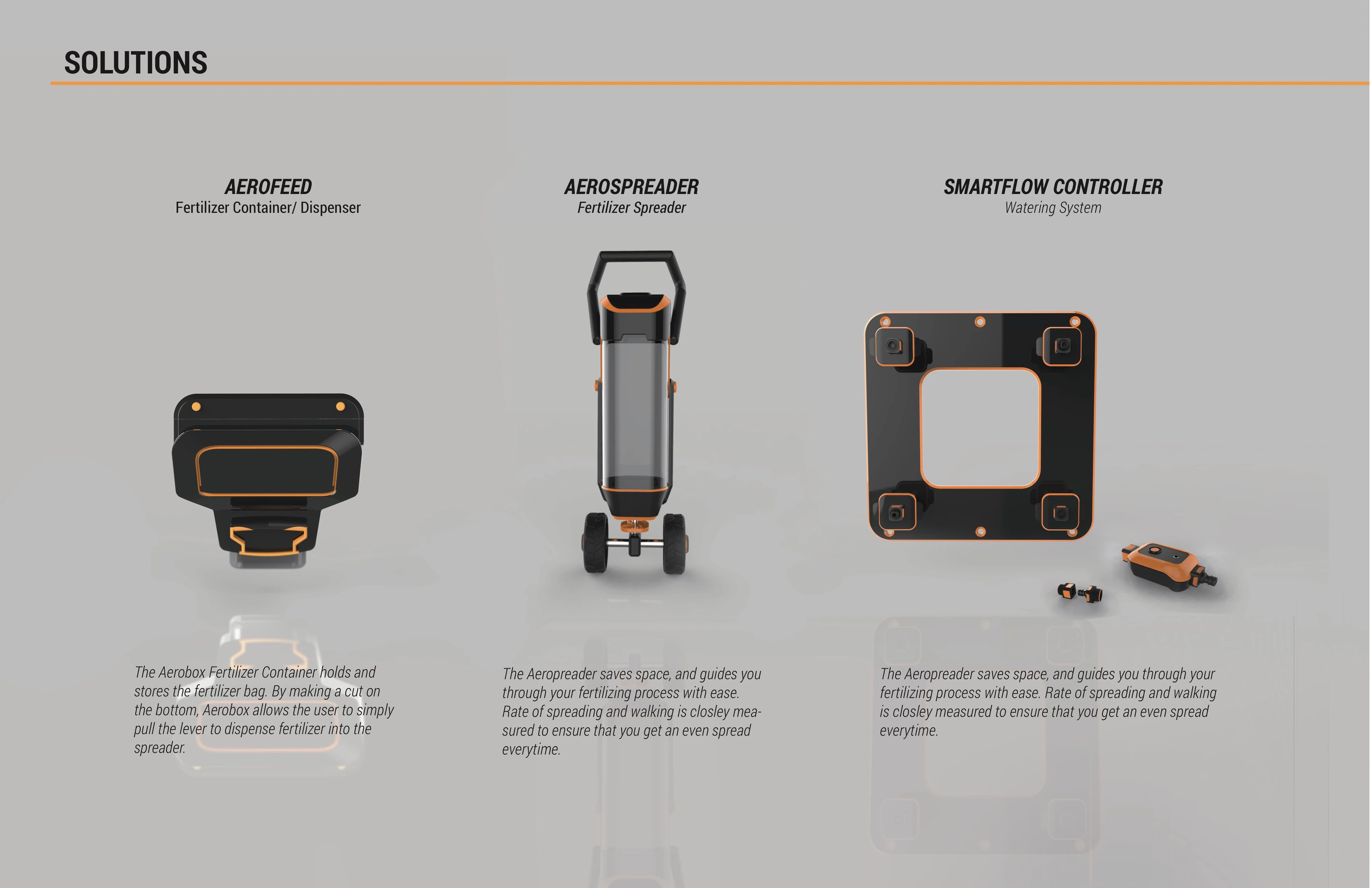
Storage
Spreader
Measurement / Control
Making the process harder to get wrong
Each part of the system was designed around a specific step in the job, so users didn’t have to calculate quantities or translate instructions into spreader settings themselves.
From storage to application
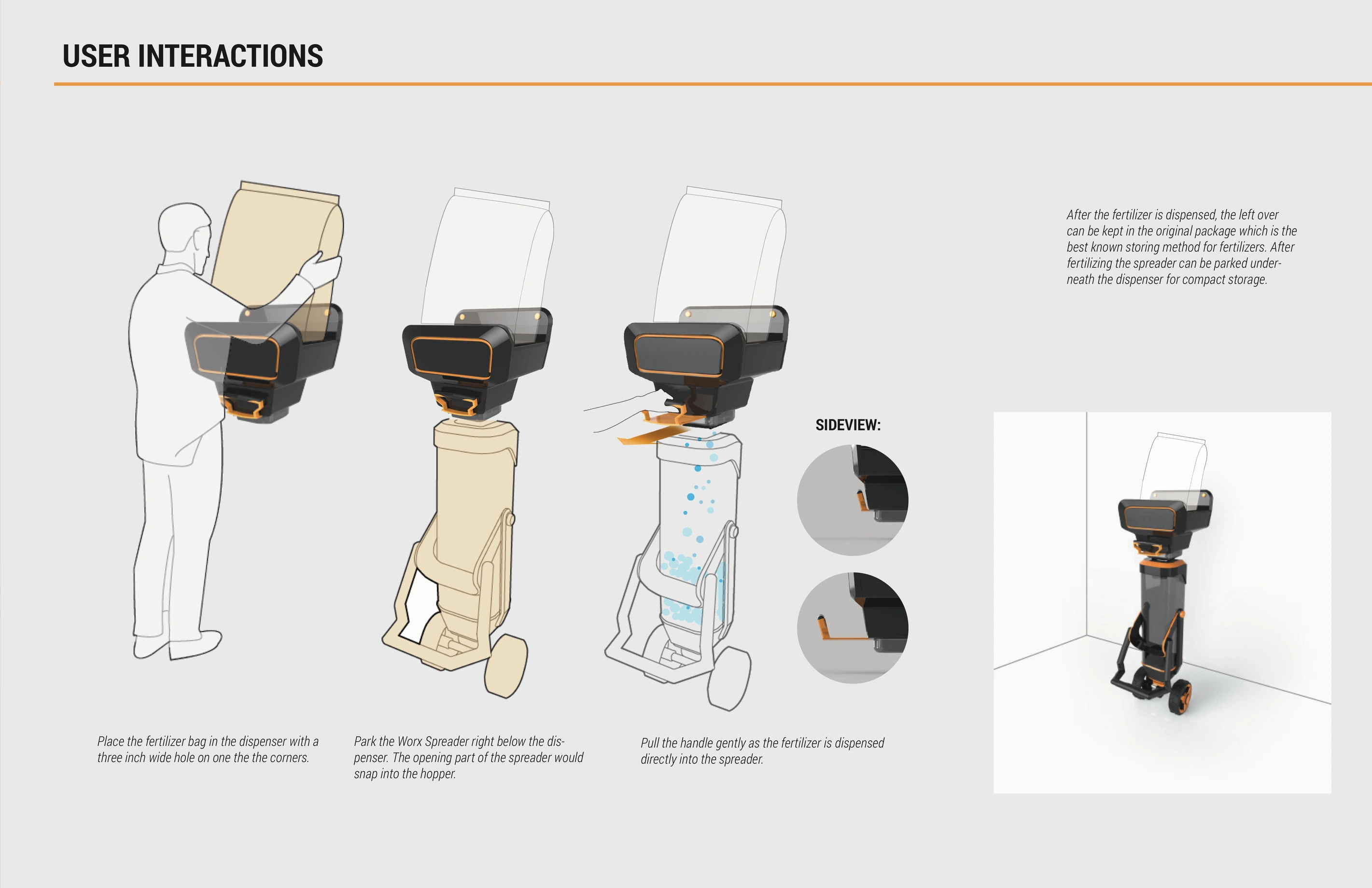
We mapped the system around the full lawn-care workflow, including transport, loading, application, and storage.
Using technology only where it helped
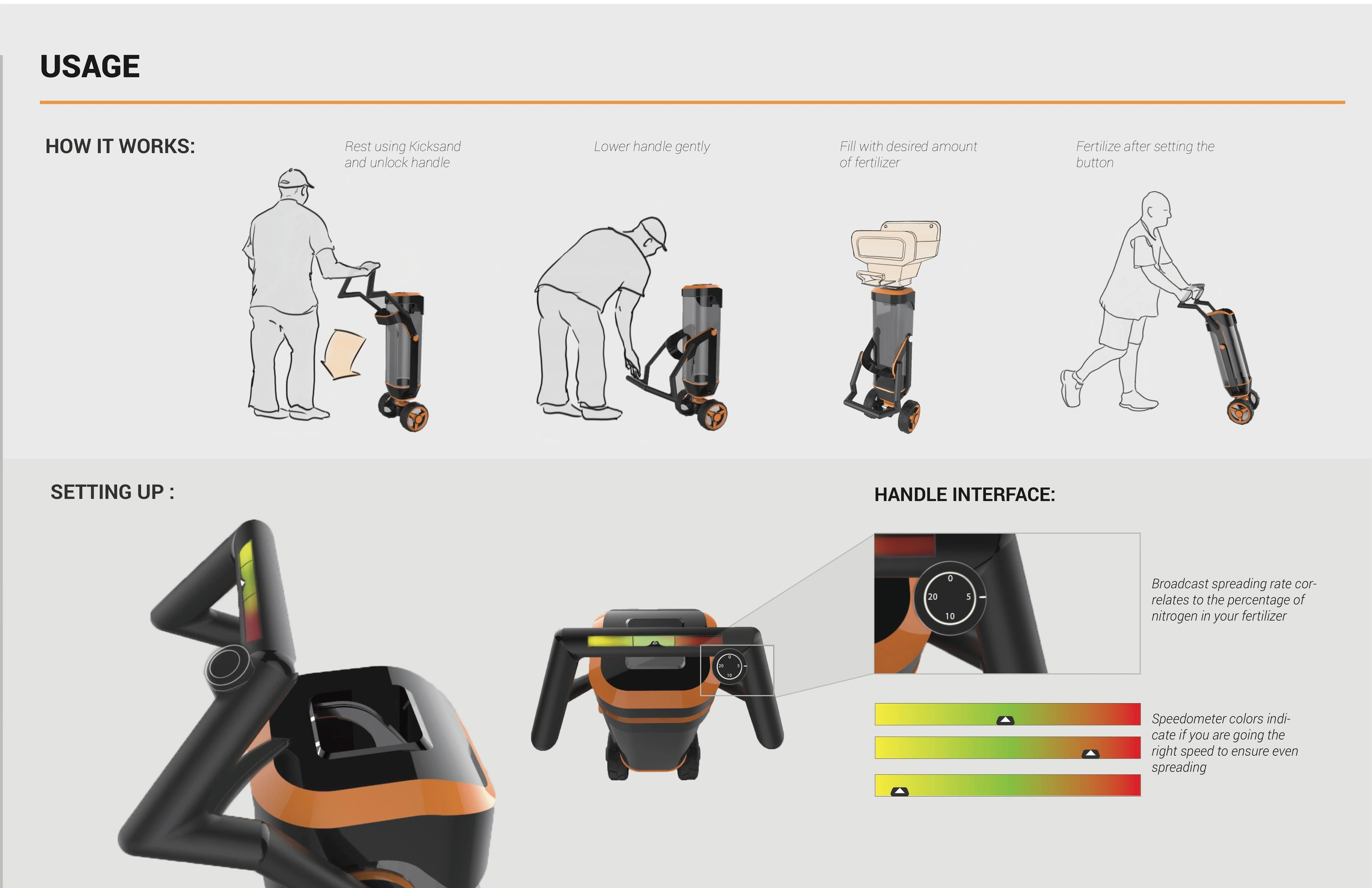
The connected layer wasn’t meant to turn lawn care into an app. It handled the things that were hardest to judge manually, like application rate and coverage, while the physical product remained usable on its own.
Prototype
Over seven weeks, we took the system from research and sketches through physical prototypes, interaction concepts, and final 3D models.
Looking back
This was one of the first projects where I stopped thinking about design as a single object or screen. The spreader wasn’t really the product. The product was everything that happened from deciding to fertilize the lawn to putting the equipment away.
I’d design a lot of the details differently now, but I still come back to that way of thinking.