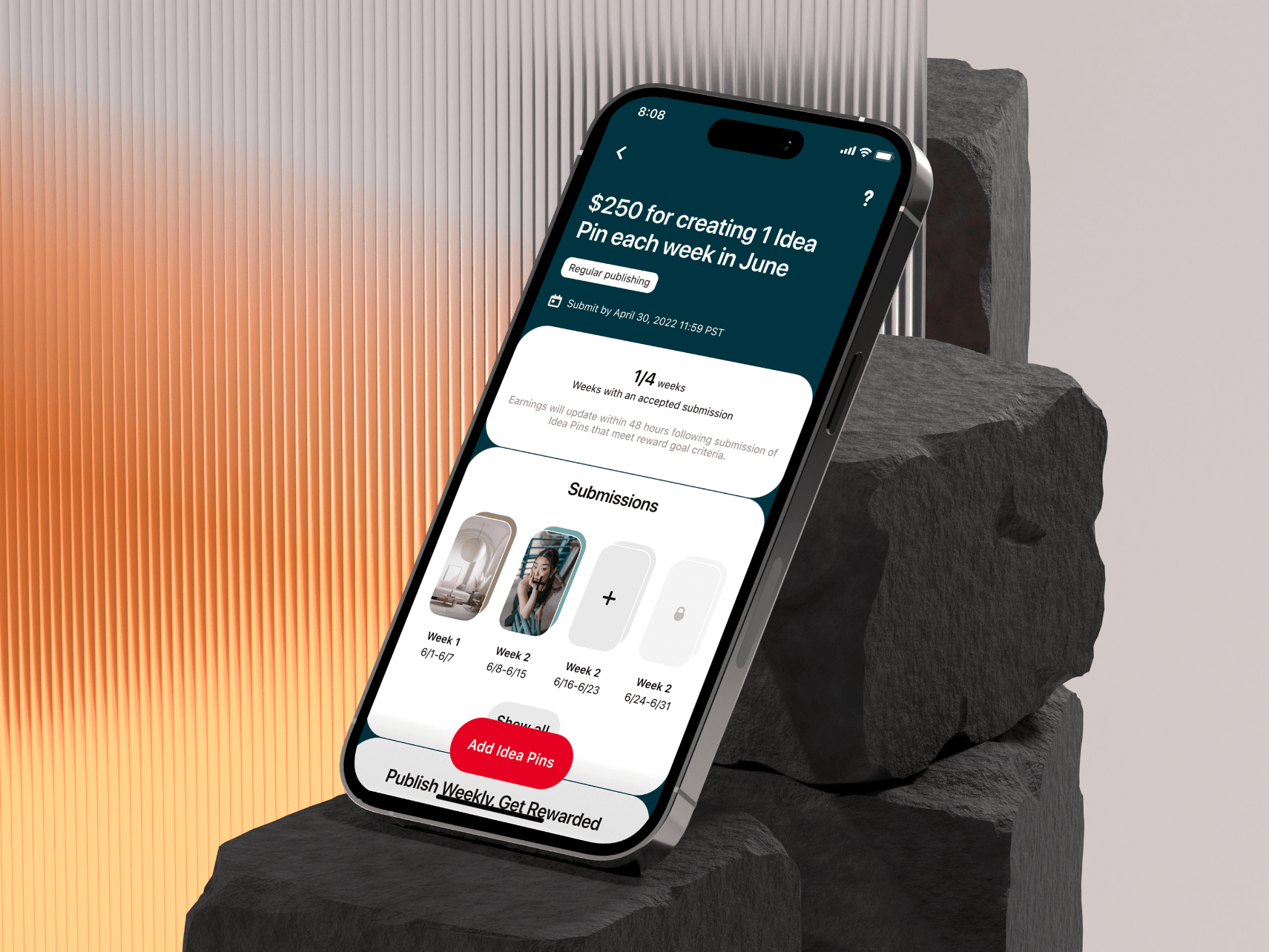
Context
Pinterest wanted to participate more meaningfully in the creator economy. But paying creators wasn’t enough. We needed a system that could encourage the behaviors Pinterest valued without making creation feel like completing a checklist.
I led design from MVP through Alpha, Beta, and toward GA. Weekly Streaks became one of the core mechanics we used to turn that idea into a product.
What shaped the product
-
Consistency meant different things.
Some creators published frequently, while others spent much longer on fewer ideas. The reward system needed to encourage consistency without defining it too narrowly.
-
Rewards shape behavior.
Cadence, thresholds, and payouts weren’t just business decisions. Each one communicated what Pinterest considered valuable participation.
-
Rules evolved with the product.
Payout, eligibility, legal, and policy constraints evolved alongside the product. The experience had to stay understandable even as those rules changed.
Designing the reward
Before designing the experience, we had to define what “rewarding consistency” actually meant. We explored different cadences, thresholds, and payout structures to find something motivating for creators without turning publishing into a checklist.
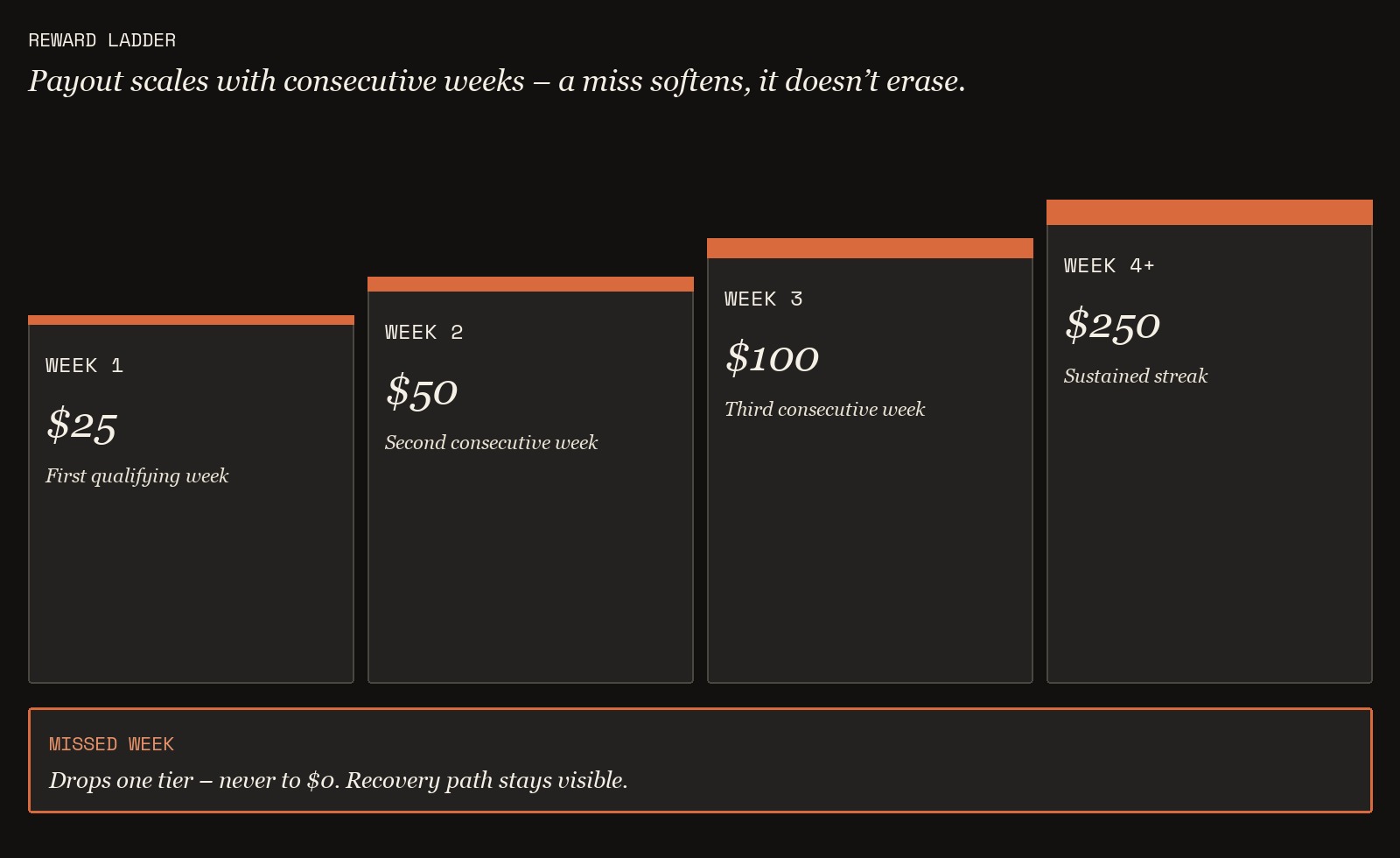
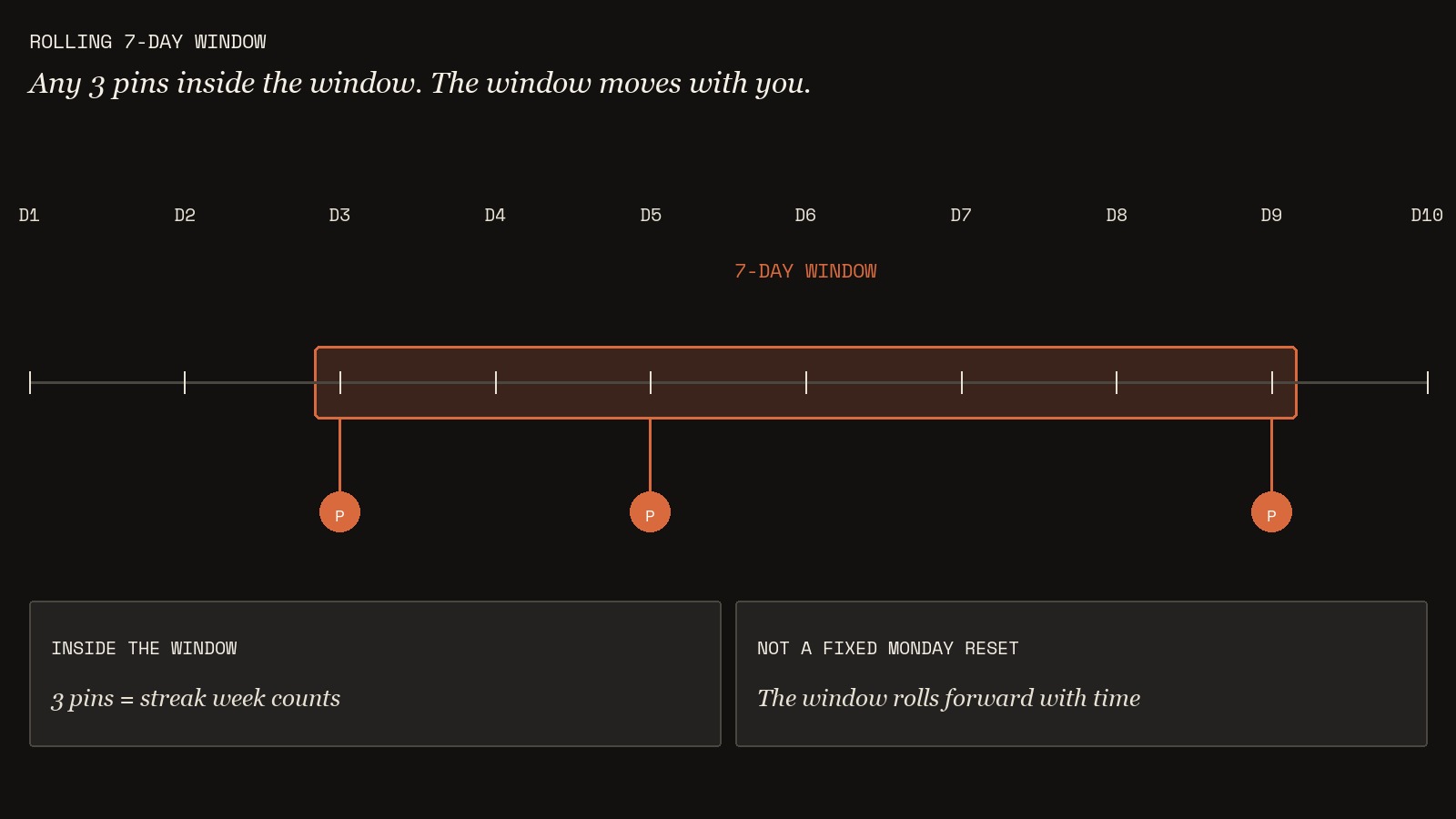
Cadence: A rolling 7-day window gave creators a clear weekly goal without forcing everyone into the same Monday-to-Sunday schedule.
Threshold: Any 3 qualifying Pins within that window counted toward the streak.
Progression: Consecutive weeks increased the reward. Missing a week dropped creators one tier instead of sending them back to zero.
The structure gave creators something concrete to work toward without requiring them to publish every day.
Starting smaller on purpose
We didn’t need the first version to prove the entire rewards program. We needed to learn whether creators understood the mechanic, whether the reward changed behavior, and where the experience broke down.
That shaped what we included in Alpha and, just as importantly, what we left out.
- Alpha~500 creatorsDo creators understand the mechanic?
- Beta~40K creators globallyDoes it change behavior at scale?
- Toward GA
Can the system scale without losing clarity?
The experience
Image coming soon
Weekly Streaks experience — final UI
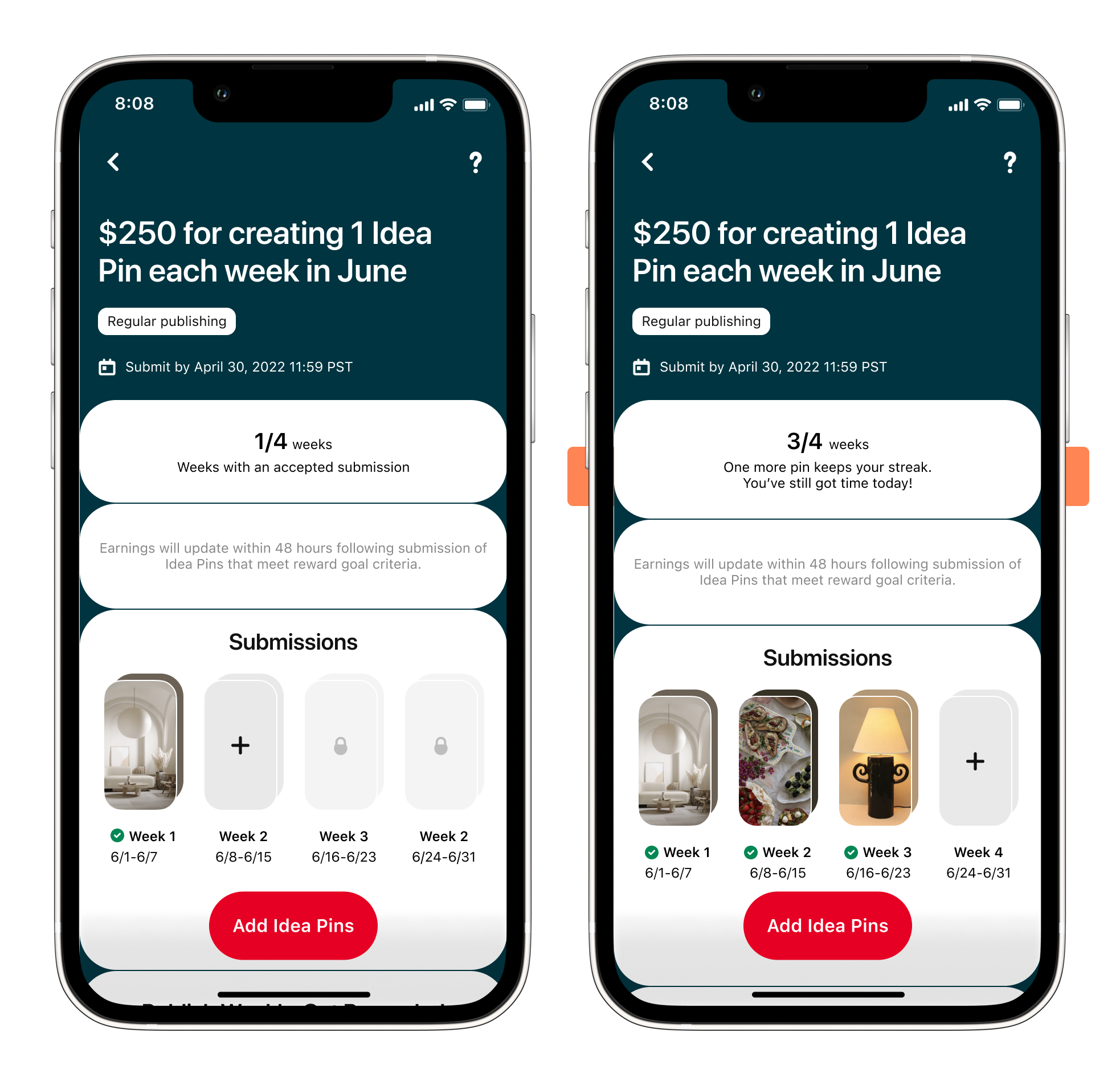
The Weekly Streaks surface: progress, submissions, and what still needs to happen this week — in one place.
We designed for recovery, not just success
Recovery got more design attention than the “on a streak” state. The moment someone was about to lose their streak mattered more than the moment everything was going well.
When the rules changed
The reward experience depended on payout timing, eligibility, and policy decisions that were still evolving alongside the product. Some of our early concepts assumed flexibility we ultimately didn’t have.
Early
Assumed earnings could feel near-instant, with eligibility and review details living in secondary copy.
Constraint
Payout timing, submission review, and who qualified were still moving with Legal and Policy — and they wouldn’t support the flexibility we’d sketched.
Final
Surfaced timing, review, and qualification in the primary rewards surface so creators could see what counted and when earnings would update.
We brought timing, review, and eligibility into the primary rewards surface so creators could understand what counted, what was under review, and when their earnings would update.
Outcome
500
creators in Alpha
~40K
creators in global Beta
During this period, Pinterest saw a 65% increase in weekly active creators. Creator Rewards was one of several initiatives contributing to the broader creator strategy.
One result I cared about just as much: we didn’t see the drop-off among casual creators that I’d been worried about since research.
That closed a loop. Research: consistency meant different things. Design: don’t punish less-frequent creators. Outcome: casual creators didn’t disproportionately drop off.
Reflection
If I were doing it again, I’d get to a payout-touching prototype much earlier. We designed the mechanic and core surfaces before we’d really experienced what payouts felt like end to end. With the compressed Alpha timeline, that meant retrofitting some decisions instead of iterating on them.
The thing I’d keep is starting with creator behavior before defining the reward. It took longer upfront, but it kept us from building a system around one narrow definition of what a “good creator” looks like.
What launching Creator Rewards taught me about 0→1 products →